博文

Applications of FRP GRP Pipe

图片
GRP Pipes or Glass Reinforced Plastics pipes   are composite material pipes consisting of a polymer matrix that is reinforced with glass fibres. They have very high corrosion resistance ability and are thus used widely for low-temperature corrosion-resistant applications. In recent times, GRP pipes are slowly replacing steel in various services like fire and water services. At the same time, GRE or GRP pipes can withstand high pressures. In many places, the term   FRP pipe   is used interchangeably for GRP pipes. In this article, we will explore an overview of GRP Pipes. GRP Family GRP: Glass–fibre reinforced plastic. GRE: Glass–fibre-reinforced epoxy. GRV: Glass–fibre vinyl ester. GRUP: Glass – fibre reinforced unsaturated polyester. The different types of pipes are selected according to the required properties like chemical resistance, temperature resistance, and mechanical properties. Characteristics of GRP Pipe Corrosion resistance: Corrosion ...

What Should You Pay Attention to when Using a Maize Flour Milling?

图片
Factors to Consider when Using a Maize Flour Milling Machine: Raw material quality The quality of the raw maize can significantly affect the quality of the final flour. Make sure to use high-quality maize, free from contaminants such as stones, dirt, and other debris. Moisture content The moisture content of the raw maize can affect the milling process. If the moisture content is too high, the maize will be difficult to mill, and the flour may be of poor quality. On the other hand, if the moisture content is too low, the maize will be brittle and may break into small pieces during the milling process. Milling process The  maize flour milling process  should be carefully monitored to ensure that the flour is of the desired consistency and quality. The type of milling machine, the speed of the rolls, and the size of the sieves can all affect the quality of the flour. Sifting After the milling process, the flour should be sifted to remove any large pieces of maize that may h...

What are the uses and types of pipe nipples?

图片
    In the piping and plumbing sectors, the most widely used types of pipe fittings are pipe nipples, which consist of a short straight length of pipe with a male pipe thread on both ends for joining two different female threaded fittings or pipes. Pipe nipples are widely used as adapters between different types of connections. Pipe nipples are most frequently encountered in low-pressure pipe networks. They are intended to hold straight-end hose or pipe. The working pressure of pipe nipples varies according to the pipe ’ s size and design, as well as the temperature and fluid being transferred. Pipe nipples are offered in the widest range of wall thicknesses and materials in the industry. Pipe nipples are made by cutting a length of pipe and connecting the specific end connections. ASME B16.11. Standard determines the dimentions and materials of Pipe nipple. Pipe nipples can be seamless, threaded, grooved, barbed, bent, or welded. Pipe nipple   uses Pipe nipples are the t...

What to Consider When Customizing Optical Lenses?

图片
Material Optical lenses  are made from a variety of materials, each with their own properties and characteristics. The choice of material will depend on the intended use of the lens, as well as its cost and availability.   Index of refraction The index of refraction of a lens material determines how much the lens will bend light. A lens with a higher index of refraction will produce a stronger focal point and a thinner lens, while a lens with a lower index of refraction will produce a weaker focal point and a thicker lens.   Abbe number The Abbe number, also known as the V-number, is a measure of a lens material's dispersion, or the amount by which it spreads out different wavelengths of light. A lens with a high Abbe number will have low dispersion, resulting in minimal chromatic aberration (color fringing).   Durability The durability of a lens material is an important consideration, especially for lenses that will be used in harsh or demanding environments. Harder...

What are Quick Coupler or Quick-connect Coupling?

图片
Quick couplings  are also known as  quick connect couplers . These are general purpose couplings that can connect at either end of the connection. Quick-connect couplings  are connectors or fittings used to mate fluid lines with equipment that requires repeated connections and disconnections. They are used in both hydraulic and pneumatic applications, and are designed for easy hand operation for use with fitting attachments primarily on mobile machinery. They are generally designed according to the maximum working pressure and could be made of steel, brass or stainless steel depending upon the application and the type of fluid. Their design is simple: a male end—or plug—is inserted into a female end—or socket—to make a secure, leak-tight seal. They are sometimes called push-to-connect because connecting them requires only a quick push. They usually feature a one-way sleeve to allow for break-away with a tool when a coupling is clamp mounted. Two-way sleeves allow for one-...

How to Choose the Thrust Stand?

图片
In the past years since we started selling our  drone test stand  technology, we've learned a lot of lessons through trial and error.  If you are familiar with our products, then you know that our  test thrust stands ​ combine thrust and torque measurements with voltage and current to derive the system’s power and efficiency. Perhaps the most obvious concept for such a tool, and the cheapest to build, is a system involving bearings or bushings. What we've learned, however, is that using bearings and bushings has a number of disadvantages: 1. Bearings and bushings cause friction. The random friction error causes significant uncertainty in the measurement (anywhere from 2 to 20% of the measured force). Even if the design looks rigid, there are micro deformations and movements in the system.  2. This leads to hysteresis in the force measurement: the force measured is dependent on the previous force applied. Because of the random nature of fricti...

Benefits of Continuous Inkjet Printing System for Your Production Line

图片
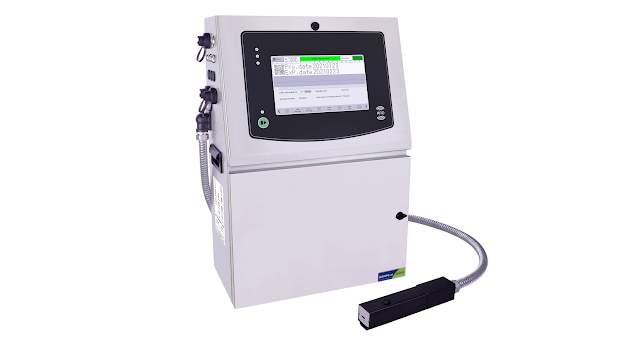
The working theory of a  continuous inkjet printer  is the nozzles of the print head eject electrically charged ink droplets, which subsequently pass through an electric field. The inkjet is broken up into droplets in the chamber by pulses from a piezoelectric crystal. The droplets needed for printing are charged by the electrodes as they break off from the inkjet, and the printer recirculates the remaining droplets. The charged droplets pass through an electrostatic field between deflector plates, and the combination of velocity and charge determines the exact position of the droplets on the substrate. Regardless of porosity, size, shape and texture, information such as coding, dates, batches or bar codes, product names and logos can be easily printed on most materials with continuous inkjet printers. This facilitates data traceability and further aids compliance with industrial production policies. Benefits of Continuous Inkjet Printing System Versatility The advantages of...